
What Gardening Has Taught Me About Growth
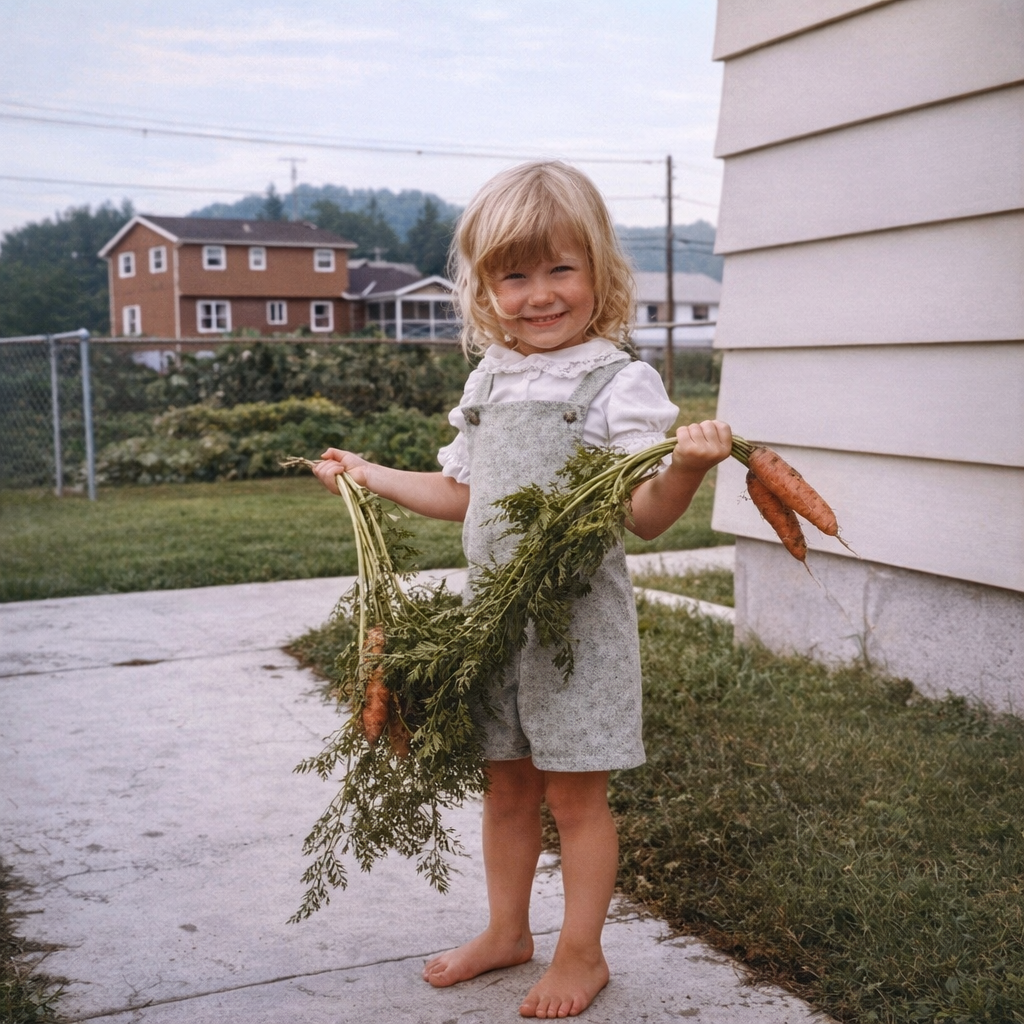
Photo of Marianne as a child holding bunches of carrots.
I recently restored a photo of myself from 1974. I’m standing barefoot outside our house, holding up a bunch of freshly pulled carrots. It’s one of my earliest memories, and I look happy.
As a three-year-old from a long line of farmers and gardeners, I was already familiar with the natural process of growth. I helped plant seeds in small ways and watched my parents and grandparents tend their gardens. In doing so, I learned the quiet rhythm of it — the passing of seasons, something taking shape underground, then emerging, then becoming ready to be gathered and shared.
Where my love of growth began
When I look at that image now, I see the beginning of my love for growth and transformation.
Of course, I didn’t know anything about coaching or psychology then. But I understood something basic: growth starts within, and it responds to care, not pressure.
Replacing force with care
At the risk of stating the obvious, you can’t force a garden to grow.
A garden doesn’t respond to threats or pressure. It doesn’t need self-judgment or criticism to make use of soil, sun, and rain. You can’t yell at a plant, shame it, or push it into producing. A garden doesn’t procrastinate or need to be reminded of a deadline. And it doesn’t spiral if the neighbor’s garden looks better.
In this way, people are like gardens. We don’t thrive under force — we grow with care.
That’s why gardeners are caregivers. They prepare the soil, choose what to plant, water, and wait. They trust that the garden knows how to grow. Then they watch with awe as growth takes shape. Honestly, watching my garden blossom is still one of my favorite things. And often, it surprises me with its abundance and beauty.
I get the same feeling of awe and wonder when I watch coaching clients — and coach mentees — begin to blossom. Often, they move through a discovery process where they learn the value of caring for their growth instead of forcing it. I love witnessing that shift, and celebrating their growth and transformation as they move toward their own harvest.
Why care and support changes everything
Much of my coaching work today is about supporting clients as they tend to their growth.
I work with people who are capable, intelligent, and accomplished. In coaching, we name what they’re trying to grow toward. Then we get honest about the “tools” they’re using to get there — and how those tools are actually working for them.
At first, many clients rely on forceful tools: pressure, urgency, judgment, and self-criticism. As it becomes clear that growth doesn’t respond well to force, we begin to consider different tools.
To support real change and transformation, we turn toward care and support.
Growth responds to attention. To space. To steadiness. To patience and acceptance. To learning how to stop fighting yourself long enough to notice what is already emerging.
Growth also responds to support — being witnessed, being challenged with care, and being reminded of what’s true when you forget. That’s part of what I do as a coach, while also helping my clients connect with the community of support around them.
Potential for Growth
When I look at that photo of the little girl holding carrots, I see someone who didn’t question whether she was allowed to hold the harvest. She didn’t apologize for taking up space. She didn’t compare what she had to anyone else’s.
She simply held what was grown — in a family, in a lineage, in a shared life close to the earth. She had potential. And she was enough.
There’s something sacred in that.
I believe you, too, began with enoughness. Before your titles, credentials, or well-honed ambition, you already had the capacity to grow. That part of you wasn’t created by self-criticism. I believe it’s revealed when you stop fighting yourself and start tending to what’s true.
As a growing being, you are worthy of belonging in your own garden — a sacred space for growth and self-care. Tend to yourself with care, and you will grow.
My work now is informed by decades of experience, but at its core it is still about tending what matters — and helping people see that they are not projects to be fixed, but living systems that respond to care.
