
Redefining Balance for High Achievers
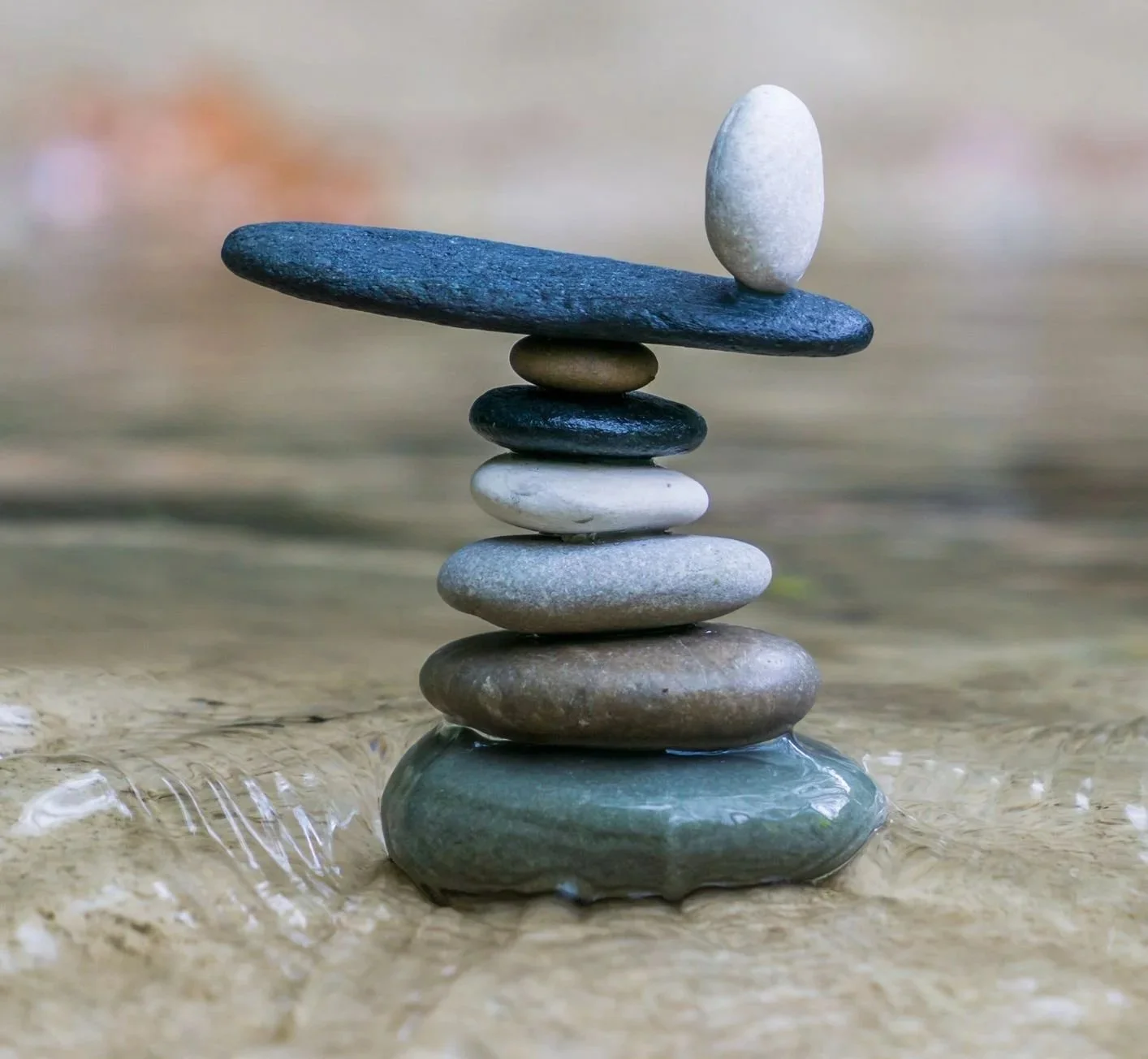
A fresh look at balance for high achievers who are tired of living on overdrive.
When people tell me they want balance, they often mean: “I want to keep doing everything, and more... but without feeling stressed all the time.”
Balance becomes a time-management project. A productivity goal. A calendar that runs efficiently enough that nothing has to get dropped and no one has to be disappointed.
And I understand why that’s appealing—especially if you’re a high performer.
Being capable has probably served you well. You know how to push, organize, execute, and deliver. You know how to make things happen. But here’s what I see again and again:
A “balanced” calendar can still create an unbalanced body.
If you’re sleeping lightly, running on adrenaline, dealing with digestive issues, living with tight shoulders and a tight jaw, or feeling like your brain never fully turns off, your life might look balanced on paper—while your system is quietly waving a red flag.
The version of balance that burns people out
High achievers often excel at self-management and structure. They can plan well, keep track of details, and fit an impressive amount into a day.
The problem is that if balance means “fitting it all in,” you’ll keep trying to earn relief by becoming even more efficient at pushing.
There’s always another request, another obligation, another opportunity, another “should.” Even good things can start to feel like one more item to manage.
And the hardest part is this: you can look successful while you’re slowly abandoning yourself.
A Different Defintion of Balance
Here’s the alternative view I want to offer:
Balance is living at a pace that supports your health—while still staying challenged, purposeful, and engaged.
It doesn’t mean lowering your standards. It doesn’t mean giving up ambition or meaningful goals. It means choosing a way of pursuing them that doesn’t require self-sacrifice as the entry fee.
Real balance isn’t about becoming a productivity machine. It’s about balancing your doing with your state of being. That requires something deeper than time management.
It requires knowing yourself beyond your roles, your resume, and the story you’ve built around achievement.
It also requires being grounded enough in your own body and mind to notice when you’re drifting into overdrive.
Balance is not... / Balance is…
Sometimes contrast makes things clearer. Consider the following:
Balance is not:
A calendar that looks perfect but leaves you tense and braced all day
Saying yes to everything because you can handle it
Measuring your worth by output
Calling it “balance” when you’re living on adrenaline
A structure that only works if you push yourself through it
Spending constant energy on people-pleasing
Balance is:
Work that challenges you and matters to you—not just work you push through
A life structure you can repeat without battling yourself to maintain it
Movement and nourishment that truly support you
Sleep that you treat as part of your long-term wellbeing, not an optional luxury
Meaningful, unhurried time with the people you love
Space for activities that feel nourishing and expressive
Knowing yourself well enough to honor what you need, not just what you can produce
If you’re neurodivergent: building structure that works with your wiring, not against it
Self-compassion as a core part of balance, not a reward you earn
A growing sense of settled-ness inside
Balance includes spirituality, too
For me personally, life is out of balance without spirituality.
For one person, spirituality might mean religion. For another, it might not. Spirituality doesn’t have to look a certain way, and it may not resonate with everyone. But at a very human level, I think most of us need something that brings us back to meaning.
We have a need for joy—for wonder and awe—for remembering we’re part of a bigger universe.
We have a need to believe we can navigate uncertainty, even when we don’t have the full plan yet.
We have a need for purpose—something that reminds us why we’re doing what we’re doing, and who we want to be while we do it.
Without that, life can start to feel like constant output and constant management. Even good achievements can feel strangely empty, like we’re checking boxes instead of living.
Spirituality—however you define it—can be one of the quiet foundations that makes balance possible. Not because it fixes your schedule, but because it reconnects you to what matters.
The inner battle matters more than the calendar
This is the part many people miss: Balance doesn’t amount to a hill of beans if you’re fighting wars with yourself internally. And in the end, if you’re going to war with yourself, you’re drawing a sword on yourself—cutting yourself into bits and pieces.
It’s hard to live a life when you feel cut into pieces. You might be externally mastering a demanding schedule while internally living under constant self-pressure. If you’re “doing it right” while berating yourself, second-guessing your choices, and treating emotions like problems to eliminate, are you likely to feel balanced?
That internal battle is exhausting. Over time, it takes a toll on the body and the spirit.
Sustainable balance includes accepting and uniting your “bits and pieces,” including your emotions. It includes making room for the driven parts and the tired parts, the confident parts and the uncertain parts, the parts that want to achieve and the parts that want to rest.
When you stop fighting yourself, something starts to settle. Your head and heart can get on the same team. Your gut doesn’t have to twist all the time. Your choices become clearer because they’re coming from steadiness rather than pressure.
In that sense, balance becomes less about managing a life—and more about living one with integrity.
Three simple questions to check in with yourself
If you want a quick “balance check” that goes deeper than your calendar, try these:
What is my body telling me lately—and am I listening or overriding?(Sleep, tension, digestion, mood, energy, irritability, brain fog.)
Does the structure of mylife feel livable—or does it require constant pushing and self-pressure to maintain?If it feels like an internal battle every day, something may need to shift.
Am I saying yes from choice—or from fear?Fear of disappointing people, falling behind, being judged, or not being enough.
You don’t need perfect answers. You just need honest ones.
I’d love to hear what you think
When you hear the word balance, what does it mean to you right now?
Does it feel like fitting everything in—and not having to say no? Or does it feel like a sustainable pace and a more settled inner life?
If you’d like to respond, tell me: What would “real balance” look like for you if it started from the inside out?
And if you’d like support finding those answers, I’d be glad to help.
